Why We Built Tabi-RV: A Letter from the Founder
I want to tell you, briefly, why this exists.
In Japanese, the word for journey is 旅 — tabi. There is a different word for the place you are going: 目的地, mokutekichi, literally “the destination point”. The two are not interchangeable, and the language is quite firm about it. A journey is the moving, not the arriving. The arriving is something else, with its own word.
Most rental fleets in Japan, however well intended, are built around mokutekichi. They are built to get you to a place — Mt. Fuji, Hokkaido, the cherry blossoms, the lavender — as fast and as photographed as possible. The vehicles are big and feature-laden and meant to take the discomfort out of moving so the destination can have all the meaning.
I wanted something different.
What we changed
Tabi-RV runs six vans. Not sixty. Six.
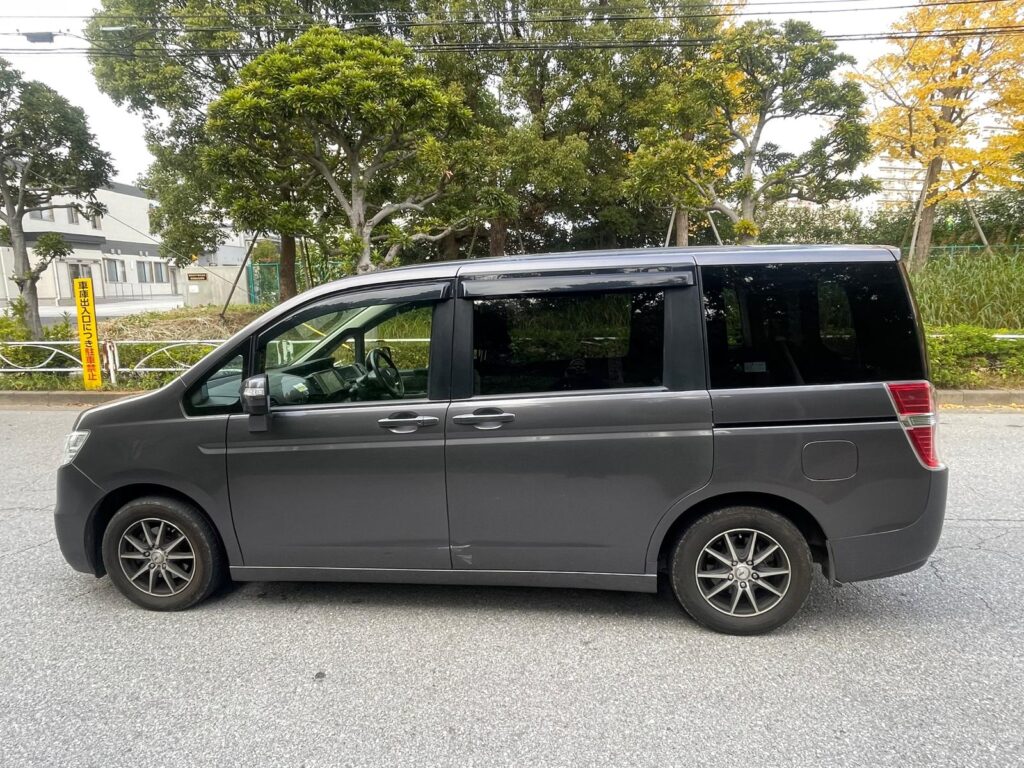
This is not a temporary number while we grow. It is the number. Each van is a converted Japanese family minivan — a Honda Stepwagon, a Mazda Premacy, a Honda Shuttle, a Nissan Serena, a Honda Odyssey — that I personally drive at the end of every week to check the tyres, the bed, and the small things that get loose. They are not enormous American-style RVs. They are not branded. They look, when parked outside a temple or a small lake, like ordinary cars that happen to be holding a quiet life.
This was deliberate. A big rental RV in Japan is two things at once: a foreigner, and a tourist. People notice. The small temple keeper waves you past the parking lot instead of into it. The michi-no-eki staff, very politely, point you to the corner spot far from the building. The local hot-spring owner explains, slowly and apologetically, that the bath is full tonight.
A converted Japanese minivan is just a car. It parks in any car park. The temple keeper smiles. The michi-no-eki staff give you the spot near the toilet. The hot-spring owner says of course, of course, take your time.
This matters more than the size of the bed.
What I learned
I started this fleet after years of running larger rental businesses, where the metric was always nights-booked-per-month and the customer was a unit of conversion. The trips people took on those vans were, to a startling degree, identical — same lakes, same photos, same restaurants, same complaint reviews about the same things.
The first six trips on Tabi-RV vans were each different. Not slightly different. Different in shape. One couple drove all the way to a tiny fishing port in north Wakayama because they had read about a fish-market breakfast there. One family spent eight days inside a thirty-kilometre radius of Lake Saiko because the daughter, six years old, kept finding new things in the same forest. One older man drove a 22-day loop of mountain temples by himself, slept in the van every night, and emailed us afterwards to say he had used the word tabi correctly for the first time in his life.
I keep that email open in a tab.
What we are not
We are not the cheapest. There are larger fleets that can rent you a van for ¥7,000 a night. Ours start at ¥9,800 because every van is serviced personally, every booking gets a hand-written route note, and we don’t add hidden cleaning fees at the end. The full price is the price.
We are not the biggest. We can take roughly thirty bookings a month at full season. After that, we close the calendar. We have refused offers from investors to expand because the small-fleet shape is the product. Scaling up would erase what makes the trips work.
We are not for everyone. If you want to drive five hundred kilometres a day and tick off twelve cities in a week, you will not enjoy what we do. The vans are slow on the highway. The beds are firm. The wifi is whatever the local cellular tower will give you. We do not have a check-in app. You meet us in person, in Edogawa-ku Tokyo, on the morning of your trip, and we make coffee, and we go over the route together, and we send you off with a printed PDF that has hand-marked notes in the margins about which roadside udon shop is worth stopping at and which to skip.
What tabi means, to me
I think a journey, properly, is a stretch of time you have given yourself permission to spend without a result. It is not a vacation, which is rest. It is not a tour, which is consumption. It is a thing you do because the moving — the watching out of a window, the slow rearrangement of where you sleep — is the thing.
The vans we built are tools for that. The route notes we write are invitations to slow down. The fact that we will only ever own six of them is the promise that we are not optimising you.
If this sounds like the kind of trip you have been quietly trying to take, write to us. Tell us when you’d like to go, what you’d like to see less of, what you’d like to find more of. We will write back.
The road is ready when you are.
— the founder